The Benefits of Journaling: 15 Science-Backed Ways Writing Improves Mental Health
- May 27
- 4 min read
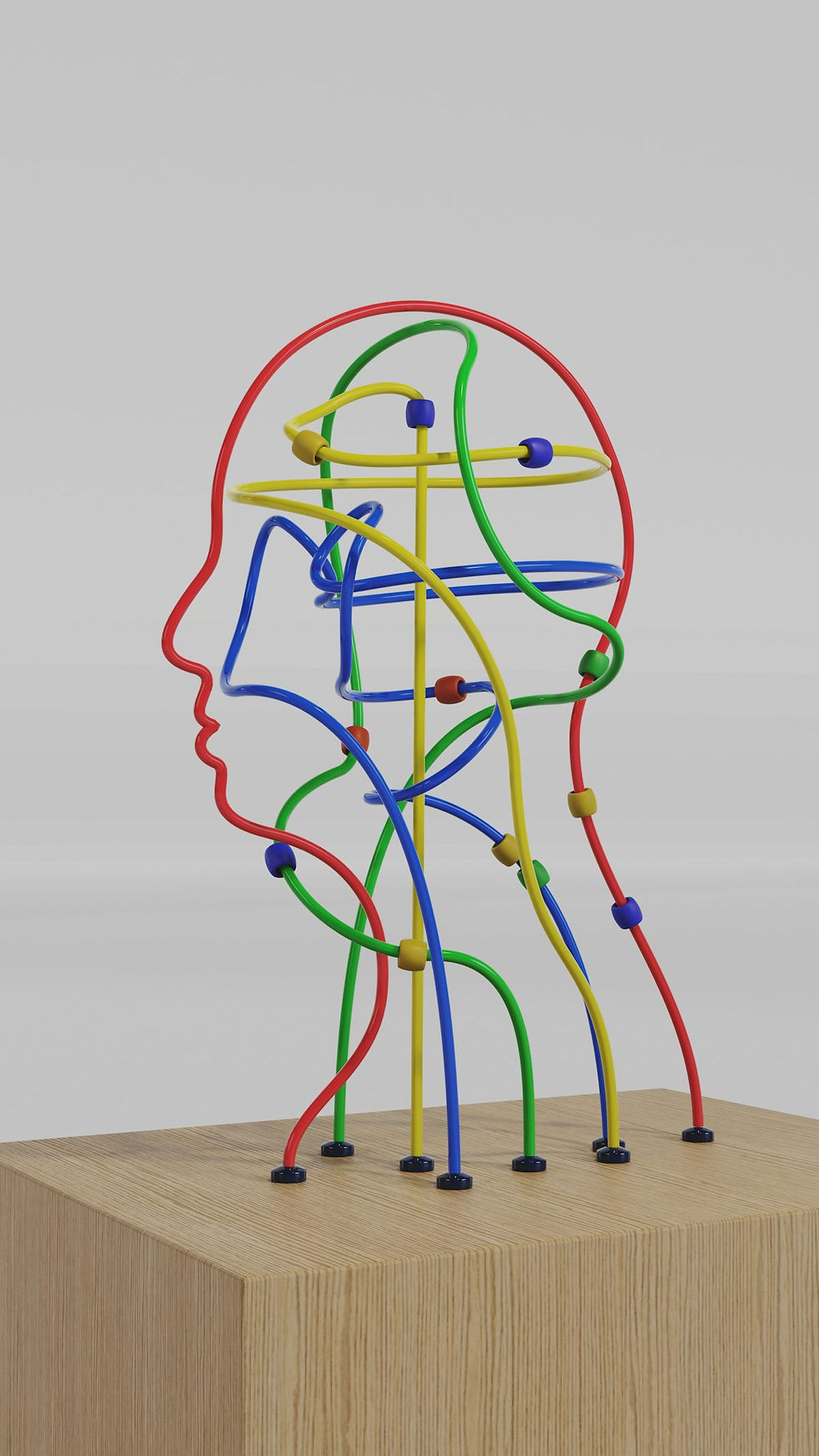
Journaling is a widely studied self-reflection practice in psychology and behavioral science. At its simplest, it involves writing down thoughts, emotions, or experiences in a structured or unstructured way. Despite how basic it seems, research shows that expressive writing can influence stress levels, emotional processing, cognition, and even physical health outcomes.
A major reason journaling works is that it helps externalize internal experiences. Instead of thoughts circulating in working memory, they are transferred into language. This shift allows the brain to organize information differently, often reducing emotional intensity and improving cognitive clarity.
Below are 15 research-informed and psychologically grounded benefits of journaling, along with how they actually work in practice.
1. Journaling reduces perceived stress through cognitive offloading
One of the most consistent findings in expressive writing research is reduced perceived stress. When individuals write about stressors, they are engaging in cognitive offloading, which reduces the load on working memory systems.
Stress often feels worse when multiple concerns are held simultaneously in the mind. Writing separates these concerns into distinct ideas, which reduces mental overload and creates a sense of order.
2. It improves emotional regulation through labeling and differentiation
Psychological research on affect labeling suggests that naming emotions can reduce their intensity. Journaling naturally encourages this process by requiring individuals to describe what they feel rather than just experiencing it.
Over time, this improves emotional differentiation. Instead of feeling “bad,” a person may begin to distinguish between frustration, disappointment, anxiety, or exhaustion. This clarity supports better emotional regulation.
3. It supports anxiety reduction by interrupting worry loops
Anxiety is often maintained by repetitive thought cycles that are abstract and unstructured. Journaling interrupts this process by converting vague worry into concrete language.
Once written down, anxious thoughts become external objects that can be evaluated. This creates psychological distance, which is associated with reduced rumination and improved cognitive control over worry.
4. Journaling improves working memory efficiency and cognitive load management
Working memory has limited capacity. When too many thoughts compete for attention, cognitive performance declines, particularly in decision-making and focus.
Journaling acts as an external storage system. By transferring thoughts onto paper, cognitive load is reduced, allowing the brain to allocate resources more efficiently to problem solving and attention tasks.
5. It reveals cognitive and behavioral patterns through longitudinal reflection
One of the strongest long-term benefits of journaling is pattern recognition. When entries are reviewed over time, recurring cognitive distortions, emotional triggers, and behavioral cycles become visible.
This is particularly relevant in cognitive behavioral frameworks, where identifying patterns is a key step in changing automatic thought processes.
6. It can support mood improvement and reduce depressive symptoms
Expressive writing studies, including work by psychologist James Pennebaker, have shown that structured emotional writing can lead to improvements in mood and psychological well-being for some individuals.
The mechanism is thought to involve emotional processing and reduced inhibition. By expressing previously unspoken thoughts, individuals reduce internal suppression, which can contribute to psychological relief.
7. Journaling enhances metacognition and self awareness
Metacognition refers to thinking about one’s own thinking. Journaling strengthens this process by forcing reflection on internal states, decisions, and emotional responses.
This increased self awareness can improve behavioral regulation, since individuals become more aware of why they respond the way they do in certain situations.
8. It improves structured problem solving under cognitive load
When problems are held mentally, they are often influenced by emotional intensity and incomplete information. Writing introduces structure, which helps separate facts from interpretations.
This supports analytical thinking by allowing individuals to break down complex problems into smaller components that can be evaluated more objectively.
9. It supports emotional processing of difficult or traumatic experiences
Research on expressive writing indicates that organizing emotional experiences into narrative form can support meaning-making processes. This is particularly relevant in experiences that feel fragmented or overwhelming.
Writing helps integrate memory, emotion, and cognition into a coherent narrative structure, which can reduce distress over time.
10. Journaling can improve sleep onset by reducing cognitive arousal
Cognitive arousal, or heightened mental activity before sleep, is a known contributor to insomnia. Journaling before bed can reduce this by externalizing intrusive thoughts.
By writing down unfinished tasks or worries, individuals signal cognitive closure, which can reduce nighttime rumination and support sleep onset.
11. It strengthens psychological resilience through autobiographical reflection
Autobiographical memory research suggests that reflecting on past experiences can improve perceived coping ability. Journaling provides a structured record of how individuals respond to challenges over time.
Revisiting entries can reinforce the perception of continuity and survivability, which contributes to resilience during future stress.
12. It reduces rumination by shifting from internal repetition to external processing
Rumination involves repetitive, passive focus on distressing thoughts. Journaling interrupts this by converting internal loops into external representations.
Once thoughts are written, they can be re-evaluated rather than automatically repeated. This shift is associated with reduced emotional persistence of negative thoughts.
13. It increases gratitude-related cognitive bias toward positive stimuli
Gratitude journaling has been studied in positive psychology as a method of increasing attention to positive experiences. This does not eliminate negative experiences but adjusts attentional bias.
Over time, individuals may become more aware of small positive events that are otherwise filtered out by negativity bias.
14. It improves decision-making by reducing information overload
Decision fatigue occurs when cognitive resources are depleted after repeated decision-making. Journaling helps by externalizing variables involved in a decision.
This creates a structured overview of options, reducing reliance on working memory and allowing more deliberate evaluation of trade-offs.
15. It supports long-term psychological insight and behavioral tracking
Journaling creates a longitudinal dataset of personal thoughts, emotions, and behaviors. This allows for retrospective analysis of patterns across time.
From a psychological perspective, this supports self-modeling, where individuals develop a more accurate understanding of their internal processes and behavioral tendencies.
Conclusion - The Benefits of Journaling
The benefits of journaling are supported by multiple areas of psychological research, including expressive writing studies, cognitive load theory, and emotion regulation frameworks.
While journaling is not a clinical treatment, it functions as a low-cost, accessible tool that can support mental clarity, emotional processing, and cognitive organization.
Its effectiveness does not depend on writing style or length, but on consistent externalization of internal experience. In doing so, journaling helps transform abstract mental noise into structured, observable thought.